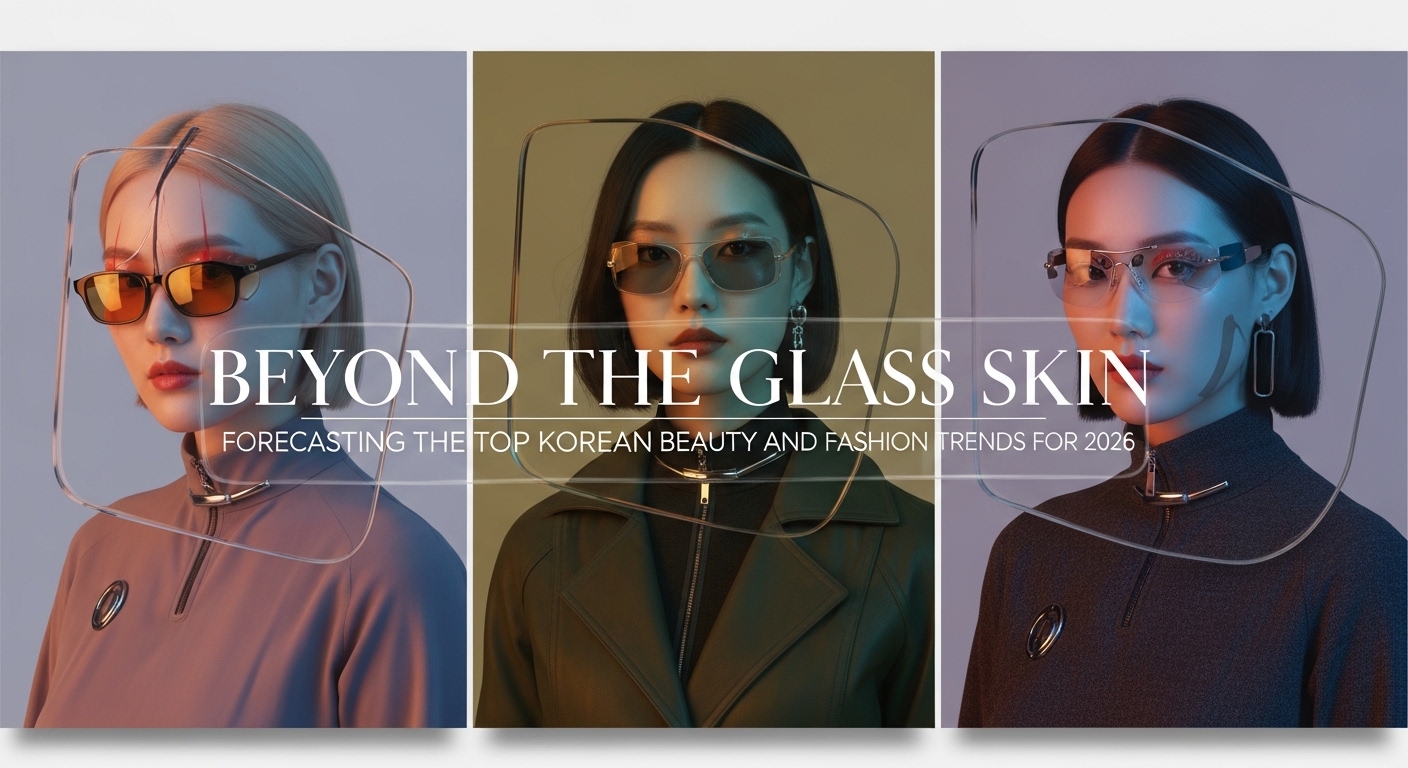
Having spent years tracking the pulse of Seoul’s style scene from the lightning-fast trend cycles of Hongdae to the high-concept boutiques in Gangnam I’ve learned one thing: Korean beauty and fashion don’t just evolve, they quantum leap. What seems like a niche micro-trend today can become a global standard tomorrow. So, as we look toward 2026, we’re not just talking about new lipstick shades or hemline heights. We’re looking at a fundamental shift in ethos, a collision of hyper-technology, deep-rooted tradition, and a growing call for conscious consumption.
Forecasting is never an exact science, but by observing the currents flowing through Korea’s creative and tech industries, we can paint a pretty clear picture of what’s to come. Forget everything you think you know. The future of K-style is smarter, more sustainable, and more deeply personal than ever before.
1. Beauty Trend: “Skin-telligence” and At-Home Bio-Hacking
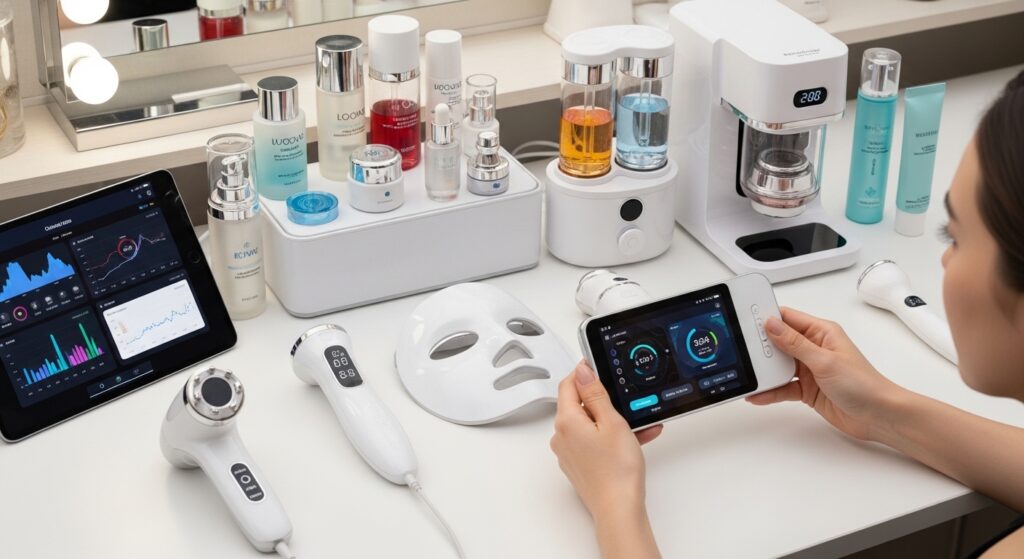
The era of the 10-step, one-size-fits-all routine is officially on its way out. While the core principle of layering hydration remains, 2026 will be defined by “Skin-telligence.” This is the hyper-personalization of skincare, powered by accessible technology. I remember when getting a professional skin analysis was a rare, expensive treat. By 2026, we’ll see that technology shrink into our bathroom cabinets. Think handheld devices that connect to an app, analyzing your skin’s moisture, oil, and melanin levels in real-time. But here’s the game-changer: the app won’t just give you a score. It will cross-reference that data with local weather, your sleep patterns (pulled from your smartwatch), and even your dietary input to recommend a specific product combination for that day.
Imagine your smart mirror suggesting you skip the potent vitamin C serum because your skin barrier is slightly compromised after a poor night’s sleep, and instead recommends a ceramide-rich cream. Brands will pivot from selling fixed-formula products to offering customizable bases and booster ampoules. You’ll become your own at-home cosmetic chemist, mixing a personalized serum each morning. It’s a move away from following influencers’ routines to truly listening to your own skin, with a little help from smart tech.
2. Fashion Trend: The “Modular” Wardrobe and Utility-Chic
For the past few years, the Korean fashion scene has been a battleground between minimalist “cleanfit” aesthetics andnostalgic Y2K maximalism. By 2026, I predict a synthesis of these ideas will emerge: the “Modular” Wardrobe.This is a direct, intelligent response to fast fashion fatigue and a desire for longevity. It’s less about a capsule wardrobe and more about a transformable one. The pieces are rooted in a minimalist, utility-chic sensibility clean lines, neutral palettes, impeccable tailoring but with a hidden, playful functionality.
I’ve already seen early glimmers of this in designer showrooms in Seongsu-dong. Picture a beautifully crafted trench coat where the sleeves zip off to create a vest, and the bottom half detaches to become a cropped jacket. A pair of wide-leg trousers that can be cinched at the ankle for a completely different silhouette. A single dress with discreet buttons and ties that allow it to be worn as a halter, one-shoulder, or cap-sleeve style.
This isn’t about gimmicks; it’s about investing in high-quality, versatile garments that expand your styling options exponentially. Brands like POST ARCHIVE FACTION (PAF) are already pioneering this with their technical, deconstructable designs. By 2026, this concept will be more mainstream, championing the idea of buying fewer, smarter pieces that work harder for you. It’s sustainability through ingenuity.
3. Beauty Trend: “Fermented Futurism” and Neo-Hanbang
Korean skincare has always revered traditional ingredients, a practice known as Hanbang. For a while, the focus was simply on incorporating ginseng, mugwort, or rice water. The next wave, which I’m calling “Fermented Futurism,” is about supercharging these ancient remedies with cutting-edge biotechnology.
The science is fascinating. Fermentation breaks down ingredients into smaller, more potent molecules that the skin can absorb more easily. It also produces beneficial postbiotics that help fortify the skin’s microbiome. While brands like Sulwhasoo have long been masters of this, the 2026 approach will be far more targeted.
We’ll see labs isolating specific strains of probiotics to ferment rice bran, creating a concentrate scientifically proven to boost ceramide production. Or using advanced bio-fermentation on Houttuynia Cordata (heartleaf) to maximize its anti-inflammatory properties for sensitive skin. The packaging and marketing won’t just say “fermented rice water”; it will specify the fermentation method, the resulting bioactive compounds, and the clinically-tested effect on the skin barrier. It’s the perfect marriage of your grandmother’s wisdom and a Ph.D. lab report, delivering results that are both gentle and powerful.
4. Aesthetic Trend: “Digital Lavender” and a Softer Take on Dopamine Dressing
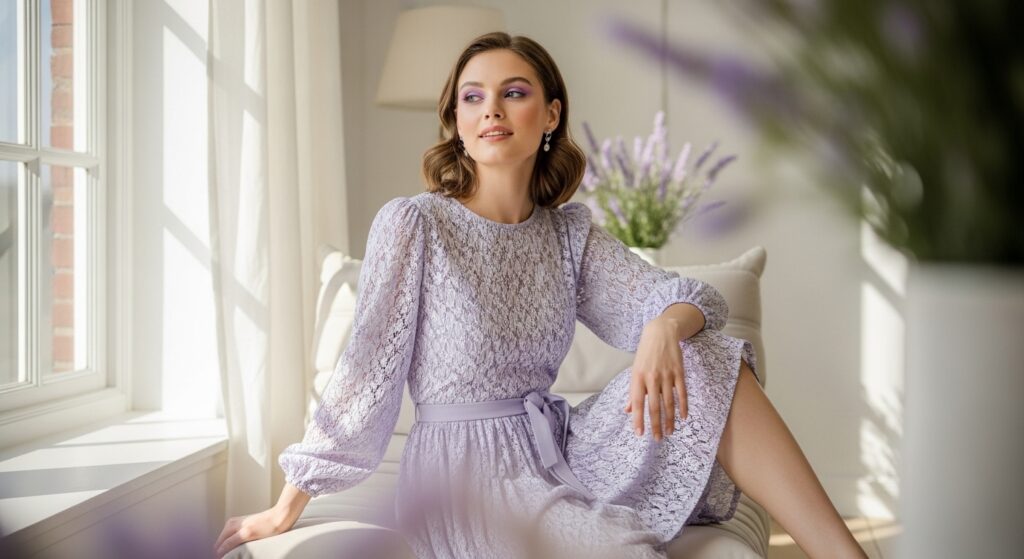
While utility and minimalism will define our core wardrobes, color and texture will be how we express our individuality. The predicted color of 2026, “Digital Lavender,” perfectly encapsulates the cultural mood. It’s a soft, calming shade that speaks to wellness and our intertwined digital and physical realities.
This signals a shift away from the jarringly bright neons of the early 2020s toward a more sophisticated form of dopamine dressing. Think less about visual shock and more about tactile and emotional comfort. The textures will be key: iridescent organzas, plush velvets, liquid-like satins, and soft, fuzzy knits. Silhouettes will continue to lean into gender fluidity, prioritizing drape and movement over restrictive fits.
We’ll see this manifest in K-pop and street style through layered, monochromatic looks in shades of lavender, sage green, and buttery yellow. It’s about creating a personal aura of calm and creativity. A soft lavender knit vest over a modular white shirt, for example, is the perfect 2026 look it’s practical, personal, and emotionally resonant.
The Common Thread: Intentionality
Looking at these trends, the overarching theme is a move toward intentionality. Whether it’s choosing skincare based on real-time data, investing in a jacket that can be worn three ways, or wearing a color that genuinely lifts your mood, the future of K-style is about making conscious, informed choices. It’s a beautiful evolution away from chasing fleeting trends and toward building a personal style that is intelligent, sustainable, and uniquely yours.
FAQs
Q: Does this mean the “glass skin” trend is over?
A: Not at all. Glass skin a complexion that looks healthy, hydrated, and luminous is the foundational goal. These 2026 trends are simply more advanced and personalized methods for achieving it, focusing on deep skin health rather than just surface-level gloss.
Q: Are these modular fashion trends going to be expensive?
A: Initially, designer versions will be, but the core concept is about long-term value. The idea is to buy one versatile, high-quality piece instead of three cheaper, single-use ones. Over time, this approach can be more economical and sustainable.
Q: Where can I start incorporating these future trends now?
A: Start small. Try a fermented essence or serum to support your skin barrier. When shopping for a new coat or trousers, consciously look for pieces with versatile details that allow for multiple styling options.
Q: Is K-fashion becoming more gender-neutral?
A: Absolutely. This has been a strong trajectory for years. Many popular Korean brands design with a gender-fluid customer in mind, focusing on oversized fits, adaptable silhouettes, and styles that look great on a wide spectrum of body types. This trend is only set to grow stronger by 2026.
