
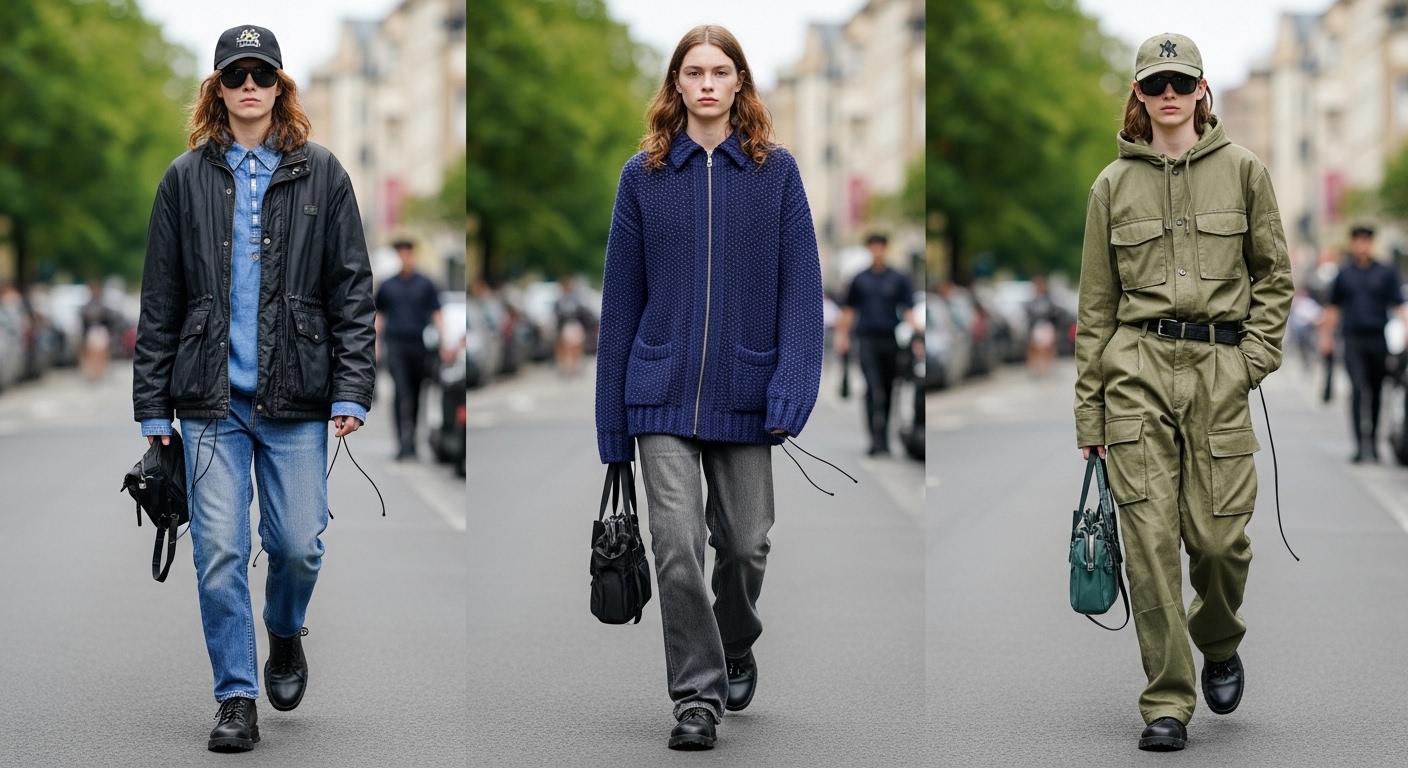
I was standing outside a warehouse show in Bushwick last October, freezing, when I noticed the shift. A kid walked past in olive ripstop cargo pants that pooled around sneakers so chunky they looked like moon boots, but the top half was this delicate, almost see-through knit in a color I can only describe as dried lavender. Nothing matched. Everything worked. That’s when it clicked: street style in 2026 isn’t about fitting an aesthetic box. It’s about friction. Contrast. The unexpected collision of hard and soft, vintage and alien, local and global.
If you’re still thinking streetwear means logo tees and limited-edition drops, you’re about two years behind. The pavement has evolved. Here is what I’m actually seeing in Tokyo, Berlin, Lagos, and downtown Los Angeles and what you should be paying attention to if you want your wardrobe to feel current, not costume-y.
Tactical Softness Is the New Uniform
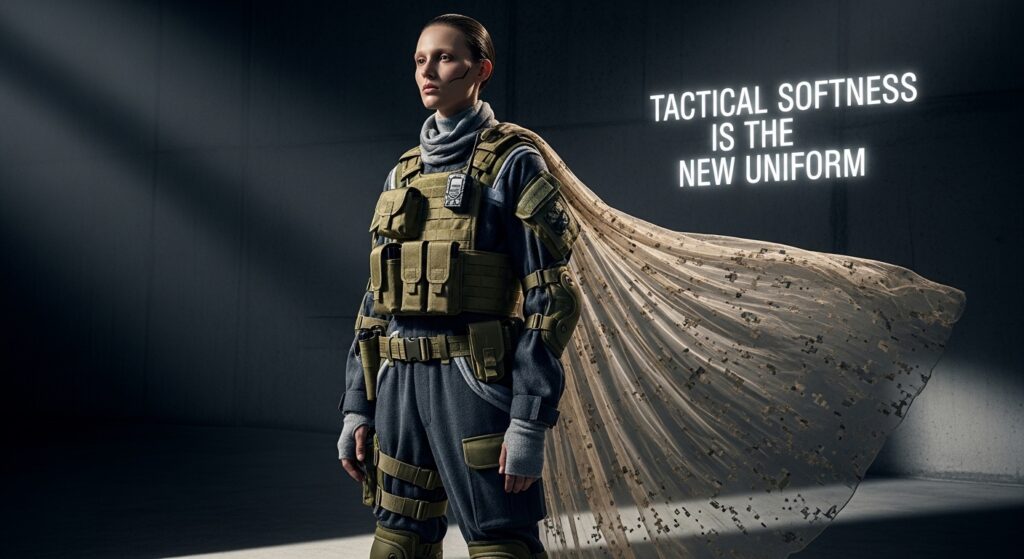
Utility wear isn’t going anywhere, but it’s morphing. The rigid, all-canvas tactical look that dominated the early 2020s is giving way to what stylists I know are calling “tactical softness.” Think cargo pockets sewn onto silk trousers. Think bomber jackets cut from washed cupro that moves like liquid when you walk. Functionality remains zippers, D-rings, adjustable hems but the fabrics have gotten emotional.
I watched a photographer in Copenhagen pair a vintage M-65 liner with a hand-dyed rayon skirt and combat boots that had clearly been resoled three times. It looked effortless because it was personal. The lesson? In 2026, utility needs to breathe. If your cargos stand up by themselves, you’re doing it wrong. Look for washed cottons, Tencel blends, and deconstructed nylon that drapes instead of armor-plates. This is one of the defining urban fashion trends heading into next year: protection without aggression.
The Sportswear Remix Goes Deeper
We’ve cycled through 90s nostalgia until the tread is bald. What’s replacing it is a weirder, more archival approach to athletic wear. Not just retro tracksuits though those are still present but the idea of vintage sportswear reimagined through a futuristic lens. Color-blocked windbreakers in muted clay and sage, but cut with asymmetric zippers. Running shorts in heavy wool gabardine. Tennis skirts layered over baggy jeans, a combo I first spotted outside a Seoul café and now see replicated from London to Mexico City.
The key here is material subversion. If it looks like it belongs in a 1978 Olympics warmup clip but feels like modern techwear, you’ve nailed it. Brands like Wales Bonner have been hinting at this, but the street-level interpretation is messier, more democratic. Thrift a pair of old Adidas Gazelles, beat them up further, and wear them with a hand-knit vest. That tension is the point. It’s what separates genuine 2026 streetwear trends from lazy throwback dressing.
Hyper-Local Goes Global
Street style used to mean either hyper-generic globalized hype everyone in the same box logo or strictly localized scenes that never crossed borders. In 2026, the most interesting dressers are smashing those boundaries without appropriating. I’m talking about Lagos-market ankara prints tailored into wide-leg carpenter pants. Tokyo kids wearing reinterpreted maekake aprons as vests over baggy denim. Mexican zapatería culture influencing hand-tooled leather belts worn with oversized blazers in Copenhagen.
This isn’t world music fashion, flattening culture into a tourist aesthetic. It’s diasporic kids and curious locals alike pulling from their own closets and their grandparents’ storage trunks. The result is street style that carries memory. It requires care, though. The difference between appreciation and theft is context. If you’re borrowing, know the story. Buy from the source when you can. Authenticity, in this current era, is the only flex that doesn’t depreciate.
Gender Fluidity Isn’t a Trend It’s the Default
By 2026, the men’s/women’s divide in street style looks increasingly archaic. Not because androgyny is having a moment, but because the distinction simply stopped mattering for anyone under thirty. Skirts on guys? Old news. What’s fresh is the complete dissolution of the binary in silhouette and sizing. Boxy, dropped-shoulder blazers that swallow the frame regardless of body type. Jeans with no gendered rise, just a straight, generous cut from hip to ankle.
I interviewed a buyer at a boutique in Berlin last season who told me they’d stopped merchandising by gender entirely. “The kids just go to the rack that fits their shoulder width,” she said. The street style takeaway is practical: shop by proportion, not by department. A vintage women’s trench from the 80s often has better construction than the men’s reproduction anyway.
Accessories Hit the Extremes

Here’s where it gets fun. The middle ground is dead. Bags are either microscopic barely fitting a lip balm and an ID or massive enough to hold a laptop, a change of shoes, and yesterday’s groceries. Shoes follow the same polarity. We’re seeing either whisper-thin ballet flats worn with socks and wide-leg trousers, or sneakers and boots so bulbous they alter your center of gravity. There is no in-between, and that’s intentional.
Eyewear is getting similarly theatrical. I’m noticing more hand-finished acetate frames in unusual colorways dusty rose, oxidized copper worn not as afterthoughts but as the anchor of an outfit. If your accessories aren’t starting conversations, they’re not doing their job in 2026.
The Sustainability Reality Check
I’d be remiss if I didn’t address the tension here. Street style is, by nature, trend-driven. Trends encourage turnover. Turnover creates waste. The most stylish people I know in 2026 aren’t buying a new wardrobe every season; they’re editing ruthlessly and investing in pieces that straddle multiple categories. A single pair of perfectly cut black trousers. One statement coat. Good boots.
The limitation of forecasting is that it can feel like a command to consume. It shouldn’t be. The best street style outfits I’ve photographed recently involve three items max that are actually new. Everything else is inherited, altered, or thrifted. Follow the aesthetic direction, but please, don’t buy five versions of it.
Final Thoughts
Street style in 2026 rewards the curious and punishes the copycat. The movements above aren’t prescriptions; they’re observations from the sidewalk. Take the parts that resonate, ignore the rest, and wear something that feels like you actually live in the world, not just scroll through it.
FAQs
Q: What is the biggest street style trend for 2026?
A: Tactical softness utility wear rendered in fluid, unexpected fabrics like washed silk and cupro, replacing rigid cargo aesthetics.
Q: Is vintage sportswear still in style for 2026?
A: Yes, but it’s evolving. Instead of pure 90s nostalgia, expect archival athletic silhouettes reimagined in luxury or tech fabrics.
Q: How can I make street style sustainable?
A: Invest in fewer, better pieces. Prioritize tailoring, thrifting, and swapping rather than buying trend-led items every season.
Q: Are gendered clothing sections disappearing?
A: In practice, yes. The most current street style shops by fit and proportion rather than traditional men’s or women’s departments.
Q: What accessories should I invest in for 2026?
A: Go extreme: either micro-bags or oversized totes, and bold eyewear. Avoid safe, middle-ground sizes.
